Ausbildung in Germany for Pakistani Students: Vocational Training, Stipend, German Level and Visa

Written by Muhammad Hammad, Founder & Lead Study Abroad Counsellor
Published · 8 min read
Ausbildung in Germany is a paid vocational training programme of two to three and a half years, split between a company and a vocational school. Pakistani applicants need a recognised school certificate, German at about B1 or B2 and a training contract. Trainees earn a monthly stipend and can work in Germany after qualifying.
- Length
- 2 – 3.5 years
- German level
- B1 – B2
- Tuition
- None for company training, paid stipend
What is Ausbildung and how does the dual training system work?
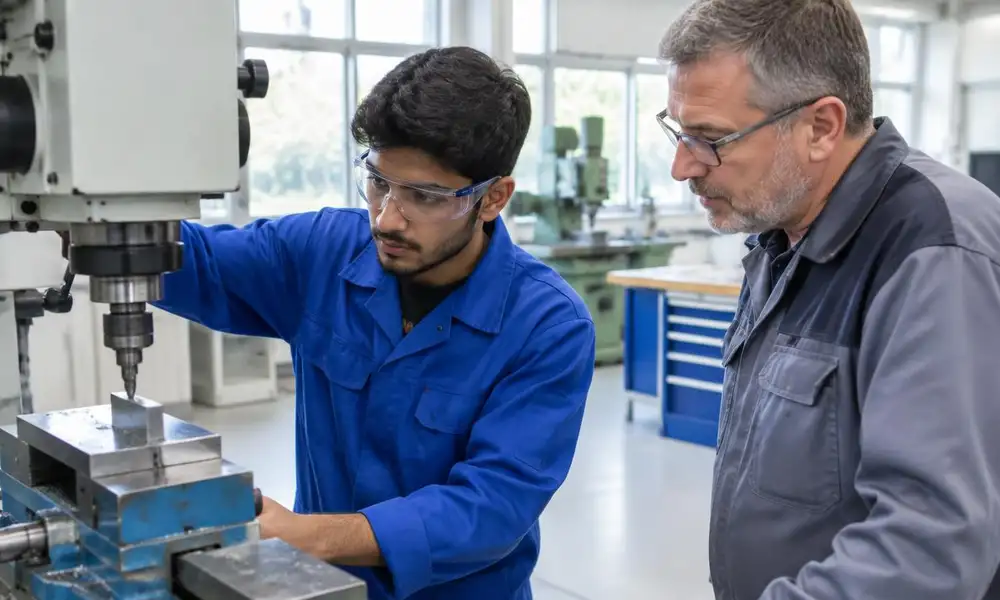
Ausbildung is German vocational training that usually follows the dual system: trainees spend about three to four days a week working at a company and one to two days at a vocational school (Berufsschule). At the end they sit a state-recognised exam and receive a qualification valued by German employers.
| Point | Ausbildung | University degree |
|---|---|---|
| Main place | Company plus vocational school | University |
| Pay | Monthly stipend | None, students self-fund |
| Language | German | English or German |
| Entry | Training contract | Admission letter |
| Result | Vocational qualification | Bachelor's or Master's |
Students who want an English-taught degree should read the public universities in Germany page instead. Those still comparing countries can start with study in Europe from Pakistan.
Who can apply for Ausbildung in Germany from Pakistan?
Pakistani applicants can apply for Ausbildung in Germany with Matric or FSc results recognised in Germany, German language at B1 or B2, a CV and motivation letter in German and, finally, a signed training contract. Many companies also look for a short gap between school and application.
- School certificate: Matric or Intermediate, with IBCC equivalence, see the IBCC equivalence page.
- German: B1 at minimum, B2 preferred for nursing and technical fields.
- Documents: German CV (Lebenslauf), motivation letter and certificates.
- Contract: a signed Ausbildungsvertrag from a German company.
German levels and where to start learning are covered in the German A1 course in Pakistan page.
Which Ausbildung courses in Germany suit Pakistani applicants?
Ausbildung courses in Germany with strong demand for international applicants include nursing, elderly care, hospitality and cooking, IT specialist, mechatronics, electrician, logistics and retail. Fields facing staff shortages usually pay higher stipends and are more open to applicants from abroad.
| Field | German name | Length |
|---|---|---|
| Nursing | Pflegefachmann / Pflegefachfrau | 3 years |
| IT specialist | Fachinformatiker | 3 years |
| Mechatronics | Mechatroniker | 3.5 years |
| Electrician | Elektroniker | 3.5 years |
| Hotel and kitchen | Hotelfachmann, Koch | 3 years |
| Logistics | Fachkraft für Lagerlogistik | 3 years |
How do you find an Ausbildung place in Germany while in Pakistan?
Applicants find an Ausbildung place by searching the Federal Employment Agency job portal, Make it in Germany and company career pages, then sending German applications directly. Online interviews are common. Once a company offers a contract, the applicant uses it for the visa.
- 1Reach B1 German. Start applying once your certificate is close.
- 2Search official portals. Use the Federal Employment Agency portal and Make it in Germany.
- 3Apply in German. Send a CV and motivation letter tailored to each company.
- 4Pass the interview. Most first interviews happen by video call.
- 5Sign the contract. Check stipend, start date and field before signing.
A German-style CV and cover letter work best, and tips on structure are in the motivation letter for study abroad page.
Never pay an agent for a "guaranteed" Ausbildung contract. Real training contracts come directly from German companies, free of charge.
How long does it take to start an Ausbildung from Pakistan?
Starting an Ausbildung from Pakistan usually takes about 9 to 15 months: six to twelve months to reach B1 German, a few weeks for document attestation, two to four months to find a company and sign a contract, and then the visa appointment and decision. Most training places start in August or September.
| Stage | Approximate time | What happens |
|---|---|---|
| German A1 to B1 | 6 to 12 months | Courses and a Goethe or telc exam |
| Document attestation | 4 to 8 weeks | IBCC, HEC where relevant, Foreign Office |
| Applications and interviews | 2 to 4 months | German CV, letters, video interviews |
| Contract and approvals | 1 to 2 months | Signed contract, agency approval if needed |
| Visa | Varies by embassy wait | National visa for vocational training |
Documents to attest early
Matric and Intermediate certificates need IBCC equivalence and attestation before German companies and the embassy accept them. Degree holders add HEC degree attestation. Starting this while learning German saves months later.
Age and profile
German law sets no single age limit, though most companies hire trainees in their late teens to early thirties. A clean school record, a short study gap and clear motivation for the chosen field matter more than age alone.
What visa and funds does Germany require for vocational training?
Germany issues a national visa for vocational training to Pakistani applicants with a signed training contract, the German certificate and, where needed, approval from the Federal Employment Agency. If the stipend does not cover living costs, the applicant must show extra funds, often through a blocked account.
- Visa type: national (D) visa for vocational training, not a university student visa.
- Contract: signed by the company, with stipend shown.
- Funds: top-up proof if the stipend is low, see the Germany blocked account page.
- Recognised documents: attested school results and German certificate.
University applicants follow a different process in the Germany student visa from Pakistan page.
What happens after finishing an Ausbildung in Germany?
After finishing an Ausbildung in Germany, graduates can take a skilled job, often with the training company, and switch to a work residence permit. Those without a job offer can usually stay for a period to search for qualified work. Years in skilled work later count towards permanent residence.
Many trainees are hired by the same company that trained them. Others use the qualification to move to a better-paid employer in the same field. Students unsure between paid training and a funded degree can compare the DAAD scholarship route.
A free profile check from our study abroad consultants helps you compare Ausbildung with a university degree in Germany. Wider country planning sits in the study in Germany page.
What mistakes do Pakistani applicants make with Ausbildung?
The most common Ausbildung mistakes are applying with A1 or A2 German, paying agents for fake contracts, confusing school-based training with paid dual training, sending one English CV to every company and applying for a university visa instead of the vocational training visa.
- Applying before reaching B1 German.
- Paying for a contract that a company should give free.
- Choosing unpaid school-based training without funds.
- Using an English CV for German companies.
- Applying on the wrong visa type.
Ausbildung in Germany, frequently asked questions
What is Ausbildung meaning in Urdu?
Ausbildung means vocational training, in Urdu "pesha warana tarbiyat". It is a two to three and a half year programme where the trainee works at a company and attends a vocational school. Trainees receive a monthly stipend and finish with a recognised German qualification accepted by employers across the country.
Can Pakistani students do Ausbildung in Germany?
Yes. Pakistani applicants can do Ausbildung in Germany with a school certificate recognised in Germany, German at about B1 or B2 level and a signed training contract from a German company. The contract comes first, then the vocational training visa.
Is Ausbildung free in Germany?
Company-based Ausbildung charges no tuition and pays the trainee a monthly stipend. School-based training, common in some health and social fields, may pay little or nothing and some private schools charge fees. Check whether a place is company-based or school-based before you apply, because the cost differs a lot.
How much is the Ausbildung salary in Germany?
Trainees earn a monthly stipend that rises each year of training. Germany sets a legal minimum for the first year, and many fields such as nursing and industry pay well above it. Pay depends on the field, company and state, and the contract always states the exact monthly amount for each year.
Can I do Ausbildung in Germany without German?
No. Almost every Ausbildung needs German at B1 level, and many companies ask for B2, because lessons at the vocational school are taught in German. Learning German in Pakistan before applying is the usual first step, and it usually takes six to twelve months to reach B1.
Can I switch from a German student visa to Ausbildung?
Switching from a university student visa to Ausbildung is possible in some cases with permission from the foreigners' office. It is a separate residence purpose, so rules and timing apply. Plan the route you want from the start, because changing purpose later can mean a new application and extra waiting.