CSC Scholarship for Pakistani Students: 2027 Guide to the Chinese Government Scholarship, Stipend and HEC Route
The CSC scholarship, also called the Chinese Government Scholarship, lets Pakistani students study a Bachelor's, Master's or PhD in China with free tuition, free housing, insurance and a monthly stipend of RMB 2,500 to 3,500. Students apply through HEC (Type A) or directly to a Chinese university (Type B), mostly between November and April.
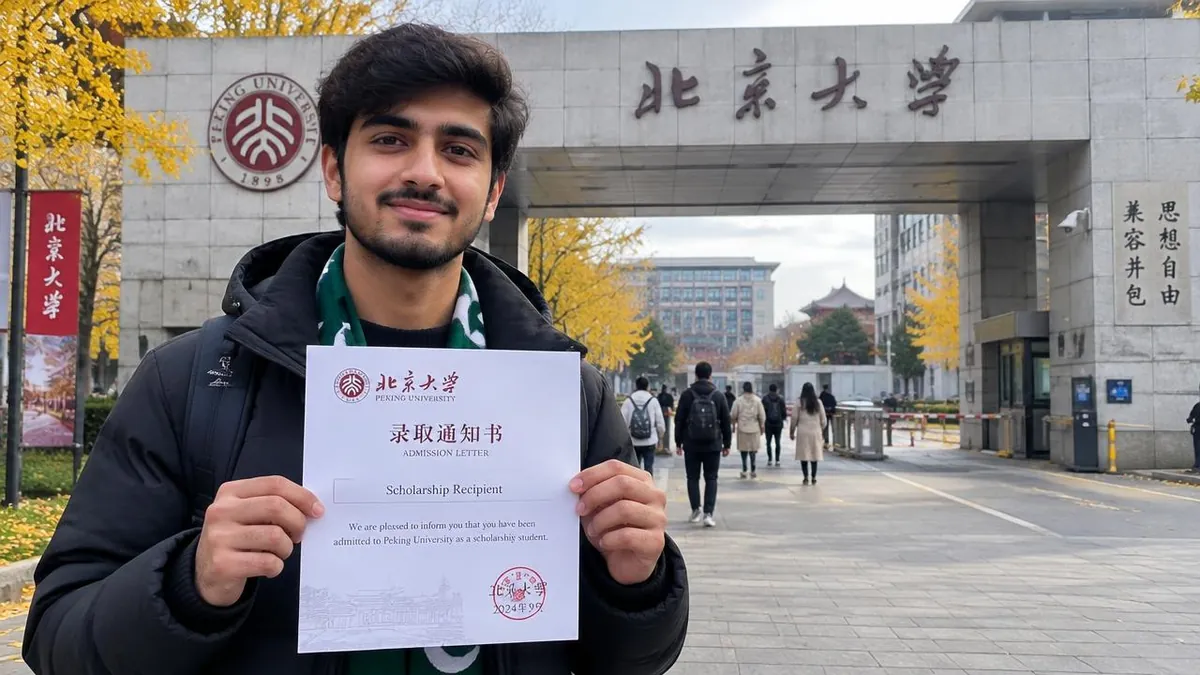
- Master's stipend
- RMB 3,000 / month
- PhD stipend
- RMB 3,500 / month
- HEC seats 2026-27
- 75
What is the CSC scholarship for Pakistani students?
The CSC scholarship is the Chinese Government Scholarship run by the China Scholarship Council for the Ministry of Education of China. Pakistani students can use it for a Bachelor's, Master's or PhD at nearly 290 designated Chinese universities, with tuition, housing, insurance and a monthly stipend paid for the full degree.
Pakistan is one of the largest senders of CSC scholars, because the award is linked to wider China–Pakistan education cooperation. Engineering, computer science, agriculture, economics and medicine-related research are the fields most Pakistani awardees choose.
Most CSC programmes for Master's and PhD students are taught in English. Bachelor's programmes are more often taught in Chinese and usually start with a one-year language course. Costs of life in Chinese cities sit in the study in China from Pakistan page.
How much does the Chinese Government Scholarship pay each month?
The Chinese Government Scholarship pays Pakistani students a monthly stipend of RMB 2,500 for Bachelor's, RMB 3,000 for Master's and RMB 3,500 for PhD study, roughly PKR 97,500 to 1.37 lakh. Tuition, university housing and medical insurance are covered as well, while the air ticket to China is paid by the student.
| Item | Coverage | Approx. in PKR |
|---|---|---|
| Tuition | Fully waived | - |
| University housing | Free dormitory or housing allowance | - |
| Stipend, Bachelor's | RMB 2,500 / month | ≈ PKR 97,500 / month |
| Stipend, Master's | RMB 3,000 / month | ≈ PKR 1.17 lakh / month |
| Stipend, PhD | RMB 3,500 / month | ≈ PKR 1.37 lakh / month |
| Medical insurance | Comprehensive insurance in China | - |
| Air ticket | Paid by the student | ≈ PKR 1–1.6 lakh one way |
PKR figures use RMB 1 ≈ PKR 39 (3 Oct 2026). The Bachelor's stipend is the standard CSC rate and should be confirmed in each award letter.
The stipend is paid in yuan into a Chinese bank account after registration. A single student in a mid-sized city can usually live on RMB 3,000, since housing is already free.
HEC confirms the coverage on its Chinese Government Scholarship financial coverage page. HEC also states that it carries no financial liability for the award.
Which CSC route is better for Pakistanis: HEC Type A or university Type B?
HEC Type A suits Pakistani students who want a national nomination for one of 75 seats with an early January deadline. University Type B suits students who already have a professor's support at a chosen university, because the university nominates them directly and deadlines run from November to April.
| Point | Type A (HEC / embassy) | Type B (university) |
|---|---|---|
| Who nominates | HEC, then the Chinese Embassy | The Chinese university |
| Where you apply | HEC portal + CSC system | CSC system + university portal |
| Seats | 75 for 2026-27 | Set by each university |
| Usual deadline | Early January | November – April |
| Test needed | HAT or USAT (plus CSCA for Bachelor's) | University rules (plus CSCA for Bachelor's) |
| Supervisor letter | Gives priority | Often essential for research degrees |
Type B offers far more seats overall, since each university receives its own quota. Applying through both routes in the same year raises the chance of a seat, as long as the documents match.
HEC handles only Type A nominations. Correspondence for Type B goes straight to the university's international office.
Who is eligible for the CSC scholarship from Pakistan?
Pakistani students are eligible for the CSC scholarship if they hold only Pakistani or AJ&K nationality, are under 25 for Bachelor's, under 35 for Master's or under 40 for PhD, hold the previous degree, meet the programme's language rule and pass the required test, such as HAT, USAT or CSCA.
- Pakistani or AJ&K nationality, with no dual nationality.
- Under 25 for Bachelor's, under 35 for Master's and under 40 for PhD.
- FSc or A-levels for Bachelor's, a 16-year degree for Master's and an 18-year degree for PhD.
- A HAT or USAT score for the HEC route, and the CSCA test for every Bachelor's applicant.
- English or HSK level as set by the chosen programme.
- Good health, confirmed by a medical form signed at a government hospital.
- No other scholarship held at the same time.
The China Scholastic Competency Assessment (CSCA) is new and compulsory for every undergraduate applicant from the 2026-27 round. Details and test dates sit on the official CSCA website.
FSc and A-level students also need their certificates converted for the file. The IBCC equivalence certificate page explains the process for Bachelor's applicants.
What documents are required for the Chinese Government Scholarship?
The Chinese Government Scholarship needs a valid passport, HEC-attested and notarised degrees and transcripts, a study plan or research proposal, two professor recommendation letters, a supervisor pre-acceptance letter where possible, a government-hospital medical form, a recent police certificate and an English or HSK test report.
- Passport information page, valid for the whole programme.
- Highest degree and transcripts, attested by the university and HEC, then notarised.
- Study plan or research proposal on the university's own form.
- Two recommendation letters from professors for Master's and PhD.
- Supervisor pre-acceptance letter where available.
- Foreigner Physical Examination Form from a government hospital.
- Police character certificate issued within the last six months.
- English or HSK test report, or an English-medium degree letter.
Attestation takes the longest, so it should start two months before the deadline. Follow the HEC degree attestation steps for study abroad to avoid a rejected file. The police character certificate for a student visa page shows how to time it inside the six-month window.
Referees should write on letterhead and sign by hand. The scholarship recommendation letter page shows what Chinese professors look for.
How do I apply for the CSC scholarship step by step?
Pakistani students apply for the CSC scholarship by choosing Type A or Type B, shortlisting universities, contacting professors, preparing attested documents and a study plan, completing the CSC online form with the correct agency code, then submitting the matching file on the HEC portal or the university's own portal before the deadline.
- 1Choose the route. Decide between HEC Type A, university Type B or both.
- 2Shortlist universities. Use the Campus China list and check each programme's language and subjects.
- 3Email professors. Send a short research summary and CV to request a pre-acceptance letter.
- 4Prepare attested documents. Attest degrees with HEC, notarise copies and book the medical test.
- 5Write the study plan. Explain the research problem, the method and how it links to Pakistan.
- 6Fill the CSC online form. Enter the correct agency code and upload every document as a clear PDF.
- 7Apply on the HEC or university portal. Submit the matching file and keep the PDF of the CSC form.
- 8Track results. Results usually arrive between June and August, followed by the JW202 form.
The online form lives on the Campus China (CSC) portal. Each applicant can usually list up to three universities in the form.
A focused research proposal carries more weight than any other document. The statement of purpose sample page and the scholarship motivation letter examples help shape a clear plan.
When is the CSC scholarship 2027 deadline for Pakistani students?
The CSC scholarship 2027 deadlines for Pakistani students fall between November 2026 and April 2027. The HEC Type A portal usually closes in early January, as it did on 5 January 2026, while most university Type B deadlines run from January to April. Results usually arrive between June and August.
| Stage | Usual months | Note |
|---|---|---|
| University Type B opens | November – December | Some top universities close by January |
| HEC Type A deadline | Early January | 5 Jan 2026 for the 2026-27 round |
| Most Type B deadlines | January – April | Set by each university |
| Interviews and shortlists | March – May | Often online |
| Results and JW202 form | June – August | Needed for the X1 visa |
| Arrival in China | Late August – September | Autumn intake |
HEC posts the new round on its Chinese Government Scholarship Program page. Dates above for 2027 are based on past rounds until HEC announces the new call.
Why does a Chinese supervisor acceptance letter matter so much?
A Chinese supervisor acceptance letter matters because both HEC and Chinese universities give priority to CSC applicants who already have a professor willing to guide their research. For Master's and PhD applicants, this letter often decides the result more than CGPA, since the university nominates students its professors want.
Professors respond best to short, specific emails. A good email names one of the professor's recent papers, gives a two-line research idea and attaches a one-page CV.
Students should email five to ten professors per university over two or three weeks. A polite follow-up after ten days is normal in China.
Medical research applicants follow the same rule. Clinical MBBS admission is separate, and the MBBS in China for Pakistani students page covers PMDC recognition.
Which common mistakes cost Pakistani students a CSC seat?
The mistakes that most often cost Pakistani students a CSC seat are a wrong agency code, unattested or un-notarised degrees, applying above the age limit, copied study plans, skipping the CSCA test for Bachelor's and trusting agents who promise a guaranteed scholarship for a fee.
- Entering the wrong agency code, which sends the file to the wrong office.
- Uploading degrees without HEC attestation or notarisation.
- Applying past the age limit for the degree level.
- Sending the same copied study plan to every university.
- Ignoring the CSCA test for Bachelor's admission.
- Paying agents who promise a guaranteed CSC seat.
A free CSC profile check with Hammad Study Abroad reviews your university shortlist and study plan before the deadlines. Students comparing other fully funded awards can read the Türkiye Bursları scholarship page and the Stipendium Hungaricum page.
For Europe-focused Master's funding, the DAAD scholarship for Pakistanis is the closest alternative. The full list of scholarships for Pakistani students compares every option.
CSC scholarship, frequently asked questions
Is the CSC scholarship fully funded for Pakistani students?
The CSC scholarship is fully funded for tuition, university housing and medical insurance, and it pays a monthly stipend of about RMB 3,000 for Master's and RMB 3,500 for PhD students. The one cost it does not cover for Pakistani awardees is the air ticket to China, which the student pays.
Can I apply for both Type A and Type B CSC in the same year?
Pakistani students can usually apply through the HEC Type A route and directly to one or more universities under Type B in the same year. The CSC system allows only one final award, so a student must accept one offer and withdraw the others once results are announced.
Is IELTS required for the CSC scholarship?
Many Chinese universities accept IELTS, TOEFL, PTE or Duolingo for English-taught CSC programmes, and some accept an English-medium degree letter instead. Each university sets its own rule. Chinese-taught programmes ask for an HSK level, so students should check the course page before choosing a test.
What CGPA is needed for the CSC scholarship?
CSC sets no single CGPA for Pakistani applicants. Competitive Master's and PhD candidates usually hold a CGPA of about 3.0 out of 4 or higher, and research papers or a strong supervisor letter can outweigh a slightly lower grade. Bachelor's applicants are judged on FSc marks and the CSCA test.
Does the CSC scholarship need a supervisor acceptance letter?
A supervisor acceptance letter is not always mandatory for the CSC scholarship. Master's and PhD applicants with a pre-acceptance letter from a Chinese professor get priority in both the HEC and university routes, and many universities treat the letter as essential for research degrees.
Can CSC scholarship holders work part-time in China?
CSC scholarship holders in China cannot take ordinary paid jobs on a student residence permit. Limited on-campus or approved internships need written permission from the university and the immigration office. Pakistani students should plan to live on the stipend rather than on part-time income.
Is the CSC agency code the same as the CSC scholarship?
The CSC agency code is a number in the online application that tells the China Scholarship Council which route the applicant is using. Type A applicants enter the code of the Chinese Embassy in Islamabad, and Type B applicants enter the code of the chosen university.
Language tests differ by programme. The PTE vs IELTS comparison helps for English-taught courses, and the HSK exam page covers Chinese-taught ones.